Why Employees Leave the Workplace for Coffee (And How Companies Fix It)
Frequent coffee runs may seem harmless, but they can quietly impact workplace productivity and operational flow.

The Daily Coffee Run
In many workplaces, employees regularly leave the building for coffee.
While this behavior often feels routine, organizations rarely evaluate the operational impact of these small daily trips.
Coffee runs may appear insignificant individually, but when repeated across teams and departments they can influence productivity, workflow timing, and workplace engagement.
Understanding why employees leave the workplace for coffee is the first step toward addressing the issue.
Why Employees Leave the Building
Employees usually leave the workplace for coffee for predictable reasons.
Limited On-Site Options
If workplace coffee offerings are outdated or inconsistent, employees look for alternatives nearby.
Modern coffee culture has raised expectations for quality and variety.
Breakroom Reliability Issues
Employees rely on consistency.
When equipment frequently runs out of product, requires maintenance, or lacks variety, employees stop depending on it.
Once trust in the breakroom declines, external routines form quickly.
Social Routine
Coffee runs often become social activities.
Employees combine breaks with conversation, errands, or time away from their desks.
While social interaction can be positive, the extended absence can disrupt workflow.
Convenience Perception
Employees subconsciously evaluate effort.
If leaving the building feels easier or more rewarding than using internal resources, the external option becomes the default.
The Productivity Impact
Coffee runs can influence operations in several ways.
Break Extension
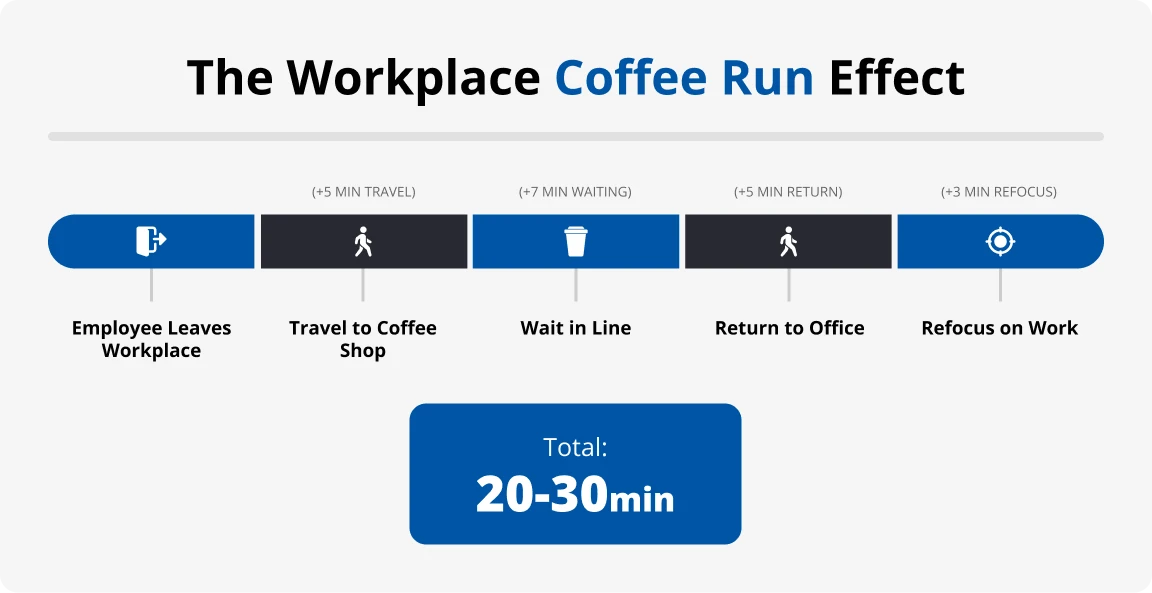
A short coffee break can easily become a 20–30 minute trip once travel and waiting time are included.
Workflow Disruption
Team collaboration can stall when key members are away from the workplace unexpectedly.
Meeting Delays
Frequent off-site breaks may cause small delays that accumulate throughout the workday.
Reduced On-Site Engagement
When employees leave regularly, they spend less time interacting within the workplace environment.
How Companies Address the Issue
Organizations increasingly evaluate how workplace amenities affect employee routines.
Solutions typically focus on improving convenience rather than restricting behavior.
Upgrading Coffee Quality
Employees are more likely to stay on-site when coffee quality meets modern expectations.
Improving Reliability
Consistent stocking and maintenance help restore trust in workplace refreshment spaces.
Expanding Beverage Variety
Providing multiple beverage options supports different preferences throughout the day.
Designing Accessible Break Areas
Strategically located coffee stations reduce friction and keep employees closer to workflow.
Workplace Coffee as Operational Infrastructure
Many companies now view refreshment services as part of operational infrastructure rather than a simple perk.
Reliable workplace coffee can:
- reduce unnecessary travel
- stabilize break patterns
- support workplace culture
- improve daily convenience
Small environmental changes often produce noticeable behavioral shifts.
Employees rarely leave the workplace for coffee because they want to be away from work. In most cases, they are simply responding to convenience and reliability.
Organizations that provide consistent, accessible refreshment options often see employees naturally remain closer to the workplace throughout the day.

Have a topic you’d like us to cover?
Contact us and let us know how we can help!
You Might Also Like:
Explore our latest and most popular posts, updated regularly to keep you in the know.