Why Employees Spend More Time Outside the Workplace Than You Think
Small daily habits often pull employees away from the workplace longer than expected. These patterns can affect productivity and workflow.

The Hidden Time Gap
Most organizations assume employees spend the majority of their day working within the workplace.
In reality, small daily habits often pull employees away from their desks more frequently than expected.
Coffee runs, snack trips, and short breaks may seem minor individually, but when repeated across a team, they can create a measurable gap in time spent on-site.
Understanding these patterns can help organizations improve both productivity and employee experience.
The Daily Exit Pattern
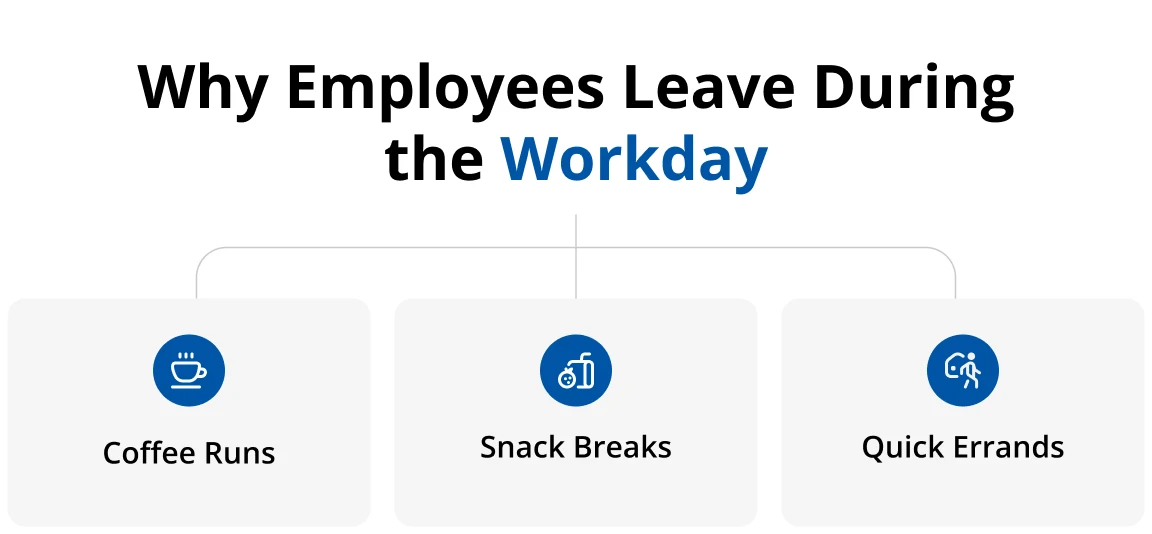
Employees leave the workplace for a variety of routine reasons:
- coffee runs
- lunch trips
- snack breaks
- short errands
Each individual trip may only take a short amount of time. However, the combination of travel, waiting, and returning often extends these breaks beyond what was originally intended.
Over time, these small exits can become part of the daily routine.
Time Adds Up Quickly
A single off-site break may take:
- 10–15 minutes to leave and return
- additional time waiting in line
- time to re-engage with work
When multiplied across multiple employees and multiple days, the impact becomes more significant.
These extended breaks can affect:
- team coordination
- meeting schedules
- response times
- overall workflow consistency
Convenience Drives Behavior
Employees tend to choose the most convenient option available to them.
If accessing coffee or refreshments requires leaving the workplace, employees will naturally build that into their routine.
Convenience often determines behavior more than policy.
When on-site options are limited or inconsistent, off-site trips become the default choice.
The Impact on Workplace Flow
Frequent off-site activity can create subtle disruptions across the organization.
These may include:
- delayed meetings
- staggered team availability
- reduced collaboration time
- interruptions in workflow
While these disruptions are rarely dramatic, they can affect overall efficiency over time.
Why Companies Overlook It
Because these behaviors are small and distributed across teams, they often go unnoticed.
There is rarely a single moment where the impact becomes obvious. Instead, it appears as general inefficiency rather than a specific issue.
Organizations tend to focus on larger operational challenges while these smaller patterns continue in the background.
Improving On-Site Engagement
Companies that address this issue often focus on improving convenience within the workplace.
This may include:
- accessible coffee solutions
- improved breakroom design
- consistent refreshment availability
- spaces that support short, efficient breaks
When employees have convenient access to what they need, they are more likely to remain on-site.
Supporting a Better Workday
Providing on-site solutions does not eliminate breaks — it improves how those breaks fit into the workday.
Employees can take time to recharge without significantly disrupting workflow.
This helps maintain both productivity and employee satisfaction.
Employees often spend more time outside the workplace than organizations realize. These small patterns, when repeated daily, can affect workflow, collaboration, and overall efficiency.
By understanding and addressing the factors that drive off-site behavior, companies can create environments that support both productivity and a better employee experience.

Have a topic you’d like us to cover?
Contact us and let us know how we can help!
You Might Also Like:
Explore our latest and most popular posts, updated regularly to keep you in the know.