The Commute-Worthy Breakroom: How Employers Make In-Office Days Feel Intentionally Better
A commute-worthy breakroom is a reliable, useful, and human workplace destination. Learn how to provide the quality food, coffee, and connection your employees expect when they return to the office.

Office attendance is rising, but the experience gap remains. Employers have made measurable progress toward their attendance goals. CBRE reported in its 2025 Americas Office Occupier Sentiment Survey that 72 percent of organizations were meeting their attendance goals, up from 61 percent the year before.
Yet, the same research found that 87 percent of organizations still face attendance-related challenges that require strategic action. The lesson is not that the office has won. It is that the conversation has moved from whether people will show up to what they experience when they do.
That distinction matters because an attendance policy can mandate presence without creating energy. The modern office must operate across sharp peaks and quiet valleys. A breakroom that is empty, understocked, or unreliable on the wrong day confirms the employee suspicion that the workplace was not designed around how people actually work.
A Commute-Worthy Workplace Earns the Trip
Employees do not evaluate the workplace only through desks and meeting rooms. They experience the commute, parking, arrival, access to food, beverage quality, places to reset, and the ease of moving through their day.
Gensler found that only 26 percent of workers strongly agreed their workplace helped them do their best work. That gap is a massive operating opportunity. A breakroom cannot repair weak leadership or poor job design, but it can remove daily friction and create visible evidence that the organization has considered the human workday.
The strongest breakrooms are not luxury showcases. They are dependable systems. Coffee is ready before the first meeting. Water and ice are clean and available. Fresh food and snacks reflect the hours people are actually onsite. Payment is frictionless. Service issues are resolved before employees learn to expect failure. The experience is valuable because it is consistently useful, not because it photographs well once.
Food and Beverage Are Now Part of Workplace Value
CBRE reported that about 40 percent of occupiers would reject a building without food and beverage options. For small companies, 54 percent were selecting buildings based directly on amenities and services.
These findings show that workplace food and beverage are no longer peripheral perks. They influence real estate decisions because they deeply affect daily convenience, employee experience, and the practical value of coming onsite.
Capitol Coffee helps employers translate that broad expectation into a right-sized program. One workplace may need premium bean-to-cup coffee and a curated pantry. Another may need a fully automated Take 5 Market with fresh food, cold beverages, and smart checkout. A manufacturing site may need dependable service across three shifts. A corporate office may need flexible capacity for peak Tuesday-through-Thursday attendance. The solution always begins with the work pattern, not a preset product package.
The Breakroom Should Support Both Focus and Connection
Gensler’s 2025 research found that time spent working with others in person has increased, while socializing nearly doubled from pandemic-era lows across many markets. That does not mean employees want constant, forced interaction. It means the office creates value when it supports both productive work and meaningful human connection.
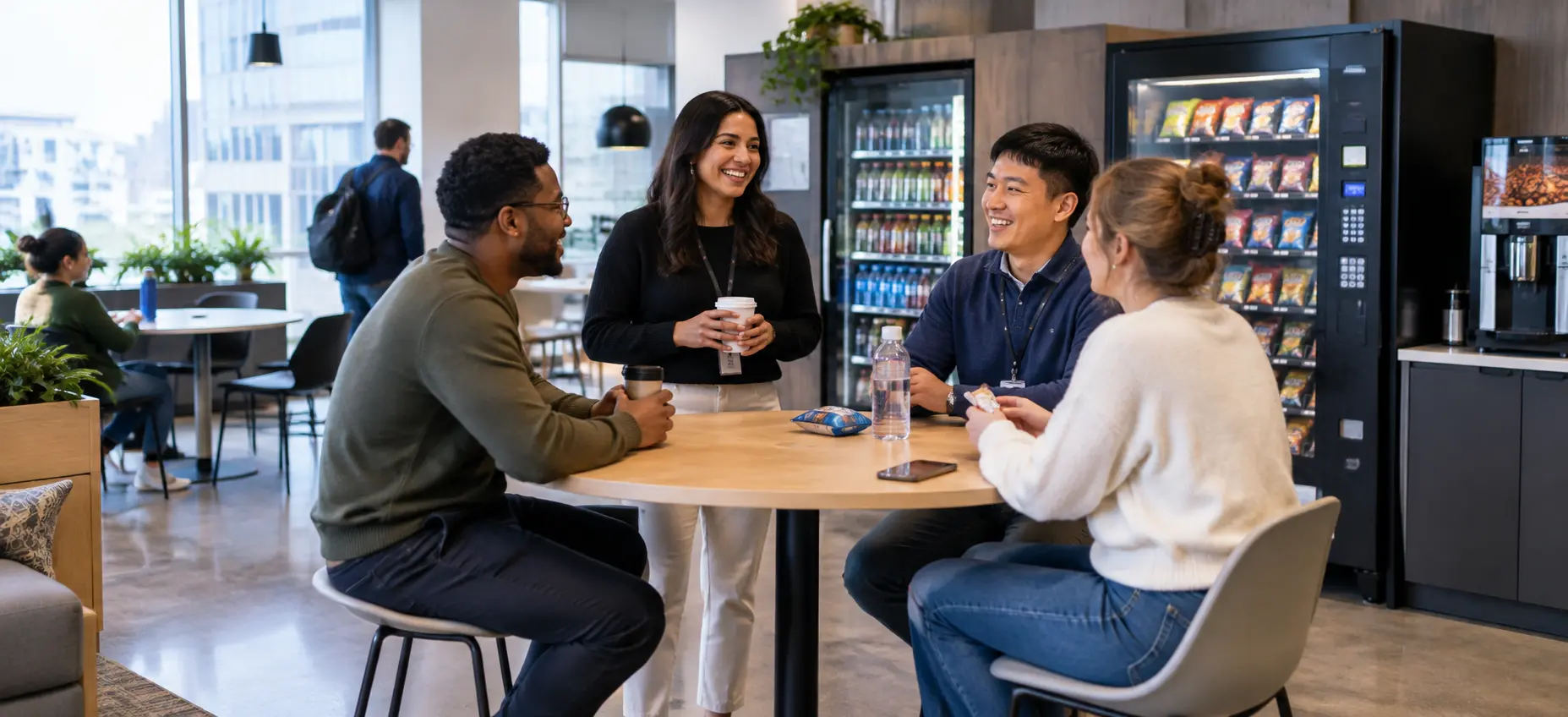
The breakroom is one of the few spaces where those objectives can peacefully coexist without another meeting invitation. A well-planned coffee and refreshment environment gives people a reason to pause without leaving the workplace. It creates short, voluntary moments where teams exchange information, welcome new employees, and recover between demanding tasks. The employer is not buying culture by the cup. It is improving the physical conditions in which culture can form.
Hybrid Work Requires Variable Capacity, Not Static Stocking
The old breakroom model assumed a stable daily headcount. Hybrid attendance makes that assumption incredibly expensive. Overstocking creates massive waste on quieter days. Understocking creates deep disappointment on peak days.
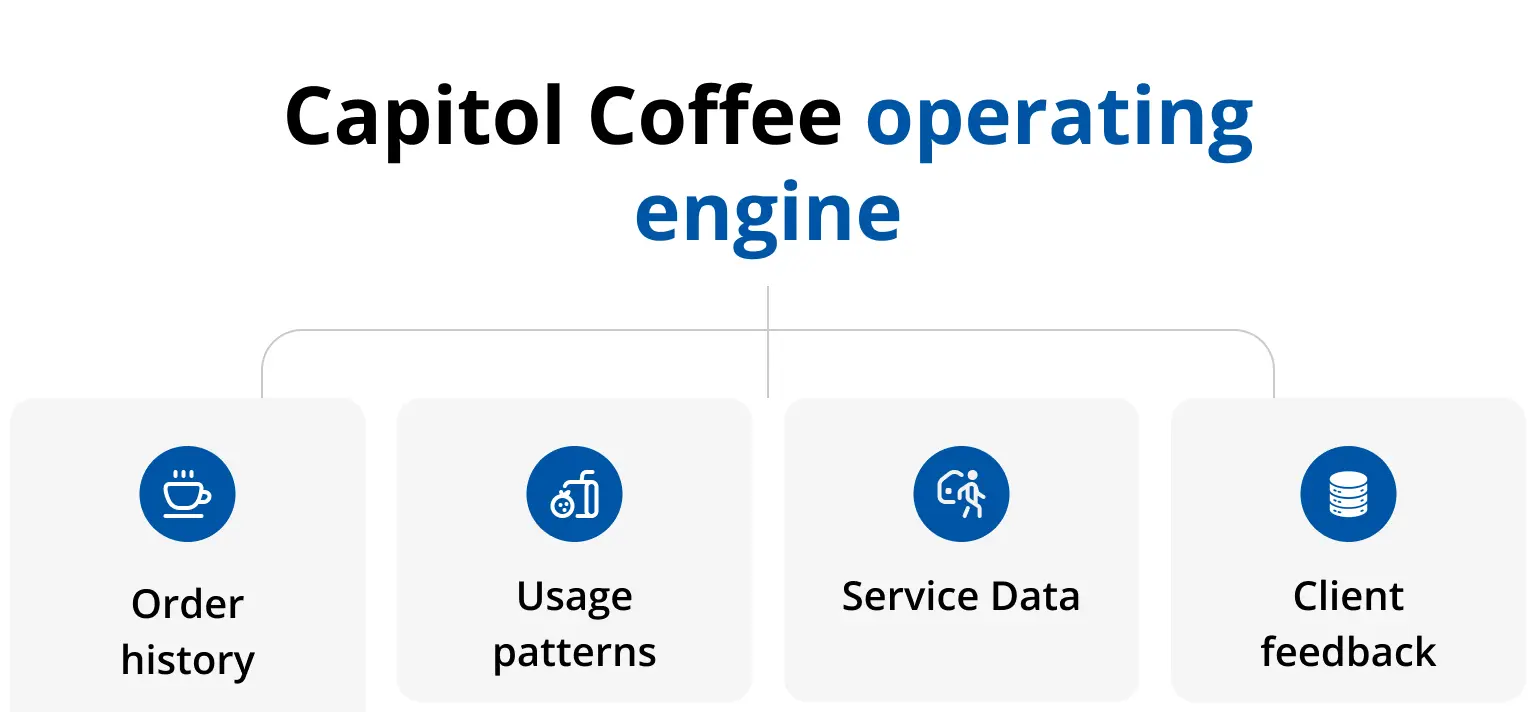
Your program must use order history, consumption patterns, service data, and client feedback to dynamically adjust product mix and delivery cadence by location and daypart.
Capitol Coffee’s remote monitoring, route infrastructure, equipment support, and broad product portfolio make that flexibility possible. The differentiator is not just access to coffee or snacks—many vendors can supply products. The true differentiator is understanding the client’s attendance pattern, creating an operating plan around it, and instantly changing the plan when employee behavior changes.
What Capitol Coffee Assesses Before Recommending a Program
A serious breakroom assessment should cover:
- Attendance by day and peak headcount
- Shift structure and employee demographics
- Existing product usage and equipment downtime
- Food access immediately surrounding the site
- Sustainability goals, space constraints, and budget
- The client’s recruitment and culture priorities
Crucially, it should also identify what employees currently leave the site to purchase. That external spend reveals unmet demand.
Capitol Coffee can then build a practical roadmap: stabilize the current program, improve the highest-value product gaps, install the right equipment, establish service standards, and measure adoption. The goal is not to sell the most equipment. It is to make the workplace more useful and significantly easier to operate.
Build the Commute-Worthy Experience in Phases
A workplace does not need to rebuild the entire breakroom at once. A disciplined first phase can improve the highest friction points: coffee quality, morning capacity, hydration access, dependable food, and a clear service response.
The employer can then compare usage, feedback, offsite trips, and service issues before adding more equipment or categories. This phased approach protects capital and makes the workplace strategy much easier to explain to finance and leadership.
Connect the Breakroom to the Wider Workplace Promise
A commute-worthy workplace is created by the full experience, not one isolated amenity. The breakroom should reinforce the employer’s stated values through quality, accessibility, cleanliness, and care.
When the organization says "people matter" but the basic employee environment is neglected, the inconsistency is highly visible. When the environment is thoughtfully operated, the promise becomes highly credible. Capitol Coffee’s differentiator is the ability to connect premium products with flawless execution. Coffee, food, water, ice, equipment, route service, and real-time monitoring can be managed as one unified system.
Frequently Asked Questions
What makes a breakroom commute worthy?
It is dependable, easy to use, relevant to employee preferences, and capable of supporting both peak attendance and quieter days without waste or service gaps.
Can amenities fix return to office resistance?
No. Amenities cannot replace strong leadership, flexibility, or meaningful work. They can, however, drastically improve the value and usability of time spent onsite.
How should an employer begin?
Start with attendance patterns, employee feedback, current usage, product gaps, service performance, and the specific outcomes the organization wants to support.
Build the workplace system behind the experience:
Capitol Coffee helps employers connect coffee, food, hydration, equipment, technology, and service around the real needs of employees and operations.

Have a topic you’d like us to cover?
Contact us and let us know how we can help!
You Might Also Like:
Explore our latest and most popular posts, updated regularly to keep you in the know.